

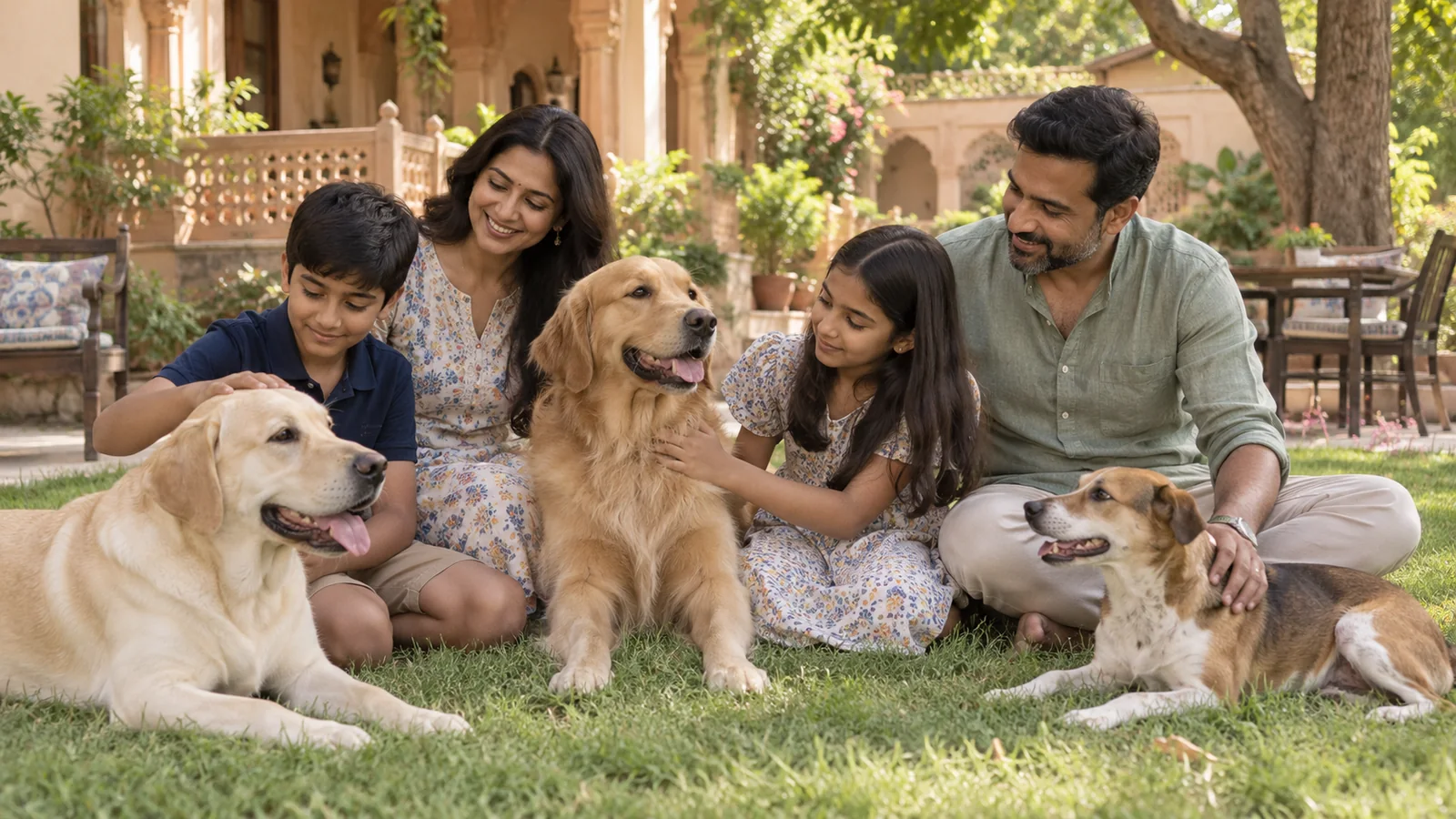
Choosing a dog for a home with children is exciting, but the best match depends on much more than a cute face or a popular breed name. The best dog breeds for families with children tend to be friendly, trainable, patient and comfortable with the activity of family life. Even then, every dog is an individual. Early socialisation, positive training and adult supervision shape the relationship between a dog and a child.
For families in Jaipur and other Indian cities, the decision also includes climate, apartment space, daily exercise, grooming and the time adults can give to the dog. This guide compares popular family-friendly dog breeds and explains how to choose a dog whose needs genuinely fit your household.
Quick answer: Labrador Retrievers, Golden Retrievers, Beagles, Poodles, Indian Pariah dogs, Cocker Spaniels, Indian Spitzes and Shih Tzus can all make excellent family companions in the right home. Temperament, upbringing and lifestyle fit matter as much as breed.
What Makes a Dog Breed Good for Families With Children?
People searching for the best dogs for kids often focus first on size. Size matters, but it is only one part of the decision. A dependable family dog should have a stable temperament, recover calmly from normal household noise and respond well to training. The dog’s energy should also suit the family’s schedule. A friendly, energetic breed can become restless when it receives only a short walk, while a lower-energy companion may be uncomfortable in a home that expects hours of outdoor activity.
Consider these factors before making a shortlist:
- Temperament: Look for a friendly, confident dog that is comfortable around people without being excessively fearful or excitable.
- Trainability: Families benefit from dogs that respond well to reward-based training and can learn household boundaries.
- Energy level: Match exercise needs to the time adults can reliably provide every day.
- Size and strength: Large, enthusiastic dogs can accidentally knock over a toddler; very small dogs can be injured by rough handling.
- Grooming and shedding: Decide how much brushing, coat care and cleaning your household can manage.
- Climate suitability: Jaipur’s hot summers require careful exercise timing, shade, water and indoor cooling, especially for long-coated or flat-faced dogs.
- Health and budget: Food, preventive care, training, grooming and breed-related medical needs continue throughout the dog’s life.
Best Dog Breeds for Families With Children: Quick Comparison
| Breed | Size | Energy | Grooming | Best suited to |
|---|---|---|---|---|
| Labrador Retriever | Large | High | Moderate | Active families and first-time dog parents |
| Golden Retriever | Large | High | High | Families wanting a gentle, social companion |
| Beagle | Medium | High | Low | Playful homes with school-age children |
| Poodle | Varies | Moderate to high | High | Trainable companion with low shedding |
| Indian Pariah/Indie | Medium | Moderate | Low | Indian homes seeking an adaptable dog |
| Cocker Spaniel | Medium | Moderate | High | Affectionate families able to maintain the coat |
| Indian Spitz | Small to medium | Moderate | Moderate | Apartment families wanting an alert companion |
| Shih Tzu | Small | Low to moderate | High | Calmer homes with gentle older children |
1. Labrador Retriever
Labradors are among the most popular kid-friendly dog breeds because they are social, eager to learn and usually enthusiastic about family activities. A well-socialised Labrador can be a patient companion for children and a rewarding choice for first-time owners who are ready for daily training and exercise.
Labs are powerful, energetic dogs. Young Labradors can jump, mouth during play and accidentally bump into small children, so calm greetings and impulse-control training should begin early. They also shed and can gain weight easily. Families need time for walks, play, mental enrichment and measured meals. Read the Naughty Dogs guide to the Labrador price in Jaipur for local costs, care and buying checks.
2. Golden Retriever
Golden Retrievers are affectionate, responsive and known for enjoying close contact with their families. Their cooperative nature makes them suitable for positive training, while their playful personality often suits homes with school-age children. They need regular exercise and companionship and may become bored when left alone for long periods.
Their beautiful coat needs frequent brushing, especially during seasonal shedding. Jaipur families should schedule walks during cooler hours and provide a cool indoor resting area in summer. A responsible source should discuss parent health, vaccination and early socialisation. Explore the Golden Retriever guide for Jaipur before deciding.
3. Beagle
Beagles are cheerful, curious and often enthusiastic playmates for children. Their medium size can suit many family homes, but their strong sense of smell means they may follow a scent and ignore a recall command. Secure doors, a well-fitted harness and consistent training are essential.
A Beagle is a good match for a family that enjoys walks, games and scent-based enrichment. They may bark or howl when bored and can become determined food hunters, so meals and household bins need management. Families seeking a lively medium-sized companion can review the local Beagle puppy guide.
4. Poodle
Poodles are intelligent, people-oriented and available in standard, miniature and toy sizes. Standard and miniature Poodles are often strong choices for families that want an active, highly trainable dog. Their curly coat sheds less than many double-coated breeds, although no dog is completely hypoallergenic.
Professional grooming every few weeks and regular brushing are part of Poodle ownership. They also need mental work: training games, puzzle feeders and varied walks help prevent boredom. Toy Poodles are delicate and generally fit homes where children understand gentle handling. A miniature or standard Poodle may be a sturdier option for an active family.
5. Indian Pariah Dog or Indie
An Indian Pariah dog, often called an Indie, can be an excellent family companion. Indies are naturally suited to the Indian climate, generally have manageable coats and can be intelligent, loyal and observant. Their personalities vary, so families should meet the individual dog and ask a rescue or foster caregiver how the dog responds to children, visitors and other animals.
An adult Indie from a responsible rescue can be especially helpful for a family that wants a known size and temperament. Puppies of every background require socialisation and training. Choosing adoption also gives children a thoughtful lesson in responsibility and compassion.
6. Cocker Spaniel
Cocker Spaniels are affectionate, playful and often happiest when included in daily family life. Their manageable size suits many apartments, while their sporting background means they still need exercise and games. A well-bred, well-socialised Cocker can be a cheerful companion for considerate children.
The coat needs regular brushing and professional grooming. Their long ears also require routine checks and careful drying after baths. Cockers can be sensitive, so calm reward-based training works better than harsh correction. Families should choose a puppy or adult with a confident, friendly temperament rather than selecting only by coat colour.
7. Indian Spitz
The Indian Spitz is bright, adaptable and usually closely attached to its family. Its smaller size can work well in apartments, provided the dog receives daily walks, play and training. Spitzes are alert and may bark at unfamiliar sounds, so early socialisation and a consistent quiet cue are useful in shared buildings.
The double coat requires regular brushing and sheds seasonally. Children should learn not to chase or corner a small dog. With respectful handling, mental stimulation and predictable routines, an Indian Spitz can become a lively family companion.
8. Shih Tzu
Shih Tzus are small companion dogs that often enjoy indoor family life and need less vigorous exercise than retrievers or Beagles. They can suit calmer apartments and families with older children who understand gentle handling. Their small size makes them vulnerable to accidental falls or rough play, so they are not automatically the easiest choice for toddlers.
Daily coat care or regular professional grooming is necessary. Their short muzzle can make them sensitive to heat, which is particularly important during Jaipur summers. Keep exercise gentle, avoid the hottest part of the day and provide air-conditioned or well-cooled indoor space. See the Naughty Dogs Shih Tzu guide for more details.
Which Dog Is Best for Your Child’s Age?
Families with babies and toddlers
Parents should choose a calm individual dog and expect to supervise every interaction. A large, gentle adult dog with known behaviour may be easier to assess than a high-energy puppy, but size and strength still need management. Create separate rest areas for the dog and use gates or pens when adults cannot actively supervise.
Families with school-age children
School-age children can participate in simple training, supervised feeding and grooming. Labradors, Golden Retrievers, Beagles, Poodles and confident Indies may suit this stage when their exercise needs match the family. Adults must remain responsible for walks, health care and training consistency.
Families with teenagers
Teenagers can help with structured walks, enrichment and training, making higher-energy dogs easier to manage. Before choosing a breed, consider school schedules, exams and future moves. The adults should be prepared to provide full care when a teenager’s routine changes.
Puppy or Adult Dog: Which Is Better for a Family?
Puppies are appealing, but they require toilet training, bite inhibition, socialisation and frequent supervision. Puppy mouthing can be difficult for young children, and the dog’s adult temperament is still developing. An adult dog from a reputable breeder, rescue or foster home may already have basic training and a more predictable personality.
Ask how the individual dog behaves around children, food, toys, handling, visitors and other pets. A calm adult mixed-breed dog with a known history may be a better family match than a puppy chosen only because its breed appears on a list of best family dogs.
Essential Safety Rules for Children and Dogs
No breed is automatically safe in every situation. Dogs communicate discomfort through body language, and children need simple rules that protect both sides.
- Always supervise young children and dogs together.
- Never allow a child to climb on, ride, pull, corner or tightly hug a dog.
- Leave the dog alone while it is eating, sleeping, chewing or caring for puppies.
- Give the dog a quiet bed or crate that children do not enter.
- Teach children to call the dog instead of chasing it.
- Use reward-based training and involve a qualified professional when behaviour concerns appear.
- Watch for stress signals such as turning away, lip licking, freezing, tucked posture, growling or trying to leave.
How to Choose the Right Family Dog in Jaipur
Start with your real weekly routine rather than your ideal one. Write down how much time adults can provide for exercise, training and grooming. Check apartment or society rules, identify a nearby veterinarian and estimate monthly food and health costs. Jaipur’s heat makes coat type, breathing ability and exercise schedule especially important.
When meeting a puppy or adult dog, observe its normal environment and behaviour. Ask for vaccination and deworming records, health information and parent details where relevant. Avoid sellers who pressure you to pay immediately, refuse visits or provide vague paperwork. The Naughty Dogs team can help families compare breeds, understand care requirements and prepare suitable food, beds, harnesses, toys and grooming essentials. Browse more dog breed guides or contact Naughty Dogs in Jaipur for guidance.
Frequently Asked Questions
What is the best dog breed for a family with young children?
Labradors and Golden Retrievers are popular because they are typically friendly and trainable, but they are energetic and strong. A calm adult dog with a known temperament may be a better match for some homes with young children. Supervision is essential with every breed.
What are the best small dog breeds for families with children?
Miniature Poodles, Indian Spitzes and Shih Tzus can suit families when children handle them gently. Small dogs are easier to injure accidentally, so the child’s age and behaviour matter as much as the dog’s size.
Are Labradors good dogs for kids?
Well-socialised Labradors are often affectionate, playful and responsive to training. Young Labs can be very energetic, so families need to teach calm greetings and supervise play around smaller children.
Which family-friendly dogs are suitable for apartments?
Indian Spitzes, Shih Tzus, Miniature Poodles, Cocker Spaniels and some Indies can adapt well to apartments. Larger breeds can also live in flats when their exercise, training and enrichment needs are met consistently.
Does breed guarantee that a dog will be good with children?
No. Breed traits can guide expectations, but genetics, early experiences, health, training and the individual dog’s personality all influence behaviour. Meet the dog, ask detailed questions and plan for adult supervision.
Final Thoughts
The best dog breed for a family with children is the one whose temperament and daily needs fit the household. Labradors and Golden Retrievers suit active families; Beagles bring playful energy; Poodles combine trainability with lower shedding; Indies offer adaptability to Indian conditions; and smaller companions can suit thoughtful apartment homes.
Choose temperament before appearance, prepare the home before the dog arrives and teach children how to interact respectfully. With responsible selection, positive training and consistent care, a dog can become a safe, joyful and deeply loved member of the family.